
Helena de Bres's lecture: 'Getting Personal: Putting the Human Back in the Humanities'
125 Convocation Way, Longmire 110
About the Event
The FSU Humanities Center will sponsor a series of eight lectures during the academic year 2026-2027. The lectures represent a range of disciplinary specialties within the humanities. Lecturers will present research that is taking humanities scholarship in new directions, deepening disciplinary expertise while demonstrating how thinking across disciplines is advantageous to the broader project of the humanities. The FSU Humanities Center anticipates that these lively afternoon events will advance discussion about the role of the humanities in higher education, and especially as an enterprise that teaches students to think critically, acquire competence in one or more fields, and prepare them for the responsibilities and opportunities of citizenship.
All lectures are planned for Thursdays at 4:30 p.m. in Beth Moor Lounge in the Longmire Building, with receptions following from approximately 6-6:30 p.m. The lectures are free, open to the public, and do not require advance registration. For questions regarding the lecture series: humanities.center@fsu.edu.
Abstract
It’s often said that within the university, and ideally the broader culture, humanities scholars are perfectly placed to clarify fundamental questions about what it means to be human, and to help us all cope with the existential threats that make those questions feel so urgent right now. This talk will agree with that sentiment, but also argue that, to perform this role well, many of us in the humanities will need to make radical changes to the way we go about doing our work. In a slogan, the humanities have to become more human if they’re to do the essential work we need them to do today —and by “human”, I mean more personal.
Most humanities scholarship rigidly adheres to standard academic conventions regarding content, structure, tone and language. Stripped of individual voice, wit and style, it reveals very little of the distinctive temperament, experiences and inner life of its author. This is a relatively recent development in the grand scheme of things. Prior to the 20th century it was much more common for humanists to integrate emotion, narrative, literary devices, and humor into their writing, so that reading their work felt like engaging with a lively flesh-and-blood fellow human.
Focusing on my own discipline, philosophy, but extending outward, I will argue that writing humanities scholarship “in the first person” is neither a distraction from, nor a mere decoration for, serious intellectual work. Instead, it’s integral to the core aims of the humanities. The talk will function as a call to action, encouraging more of us humanists to risk being our full selves on the page.
Keywords: humanities, fundamental questions, existential threats, emotion, style, narrative, humor, personal
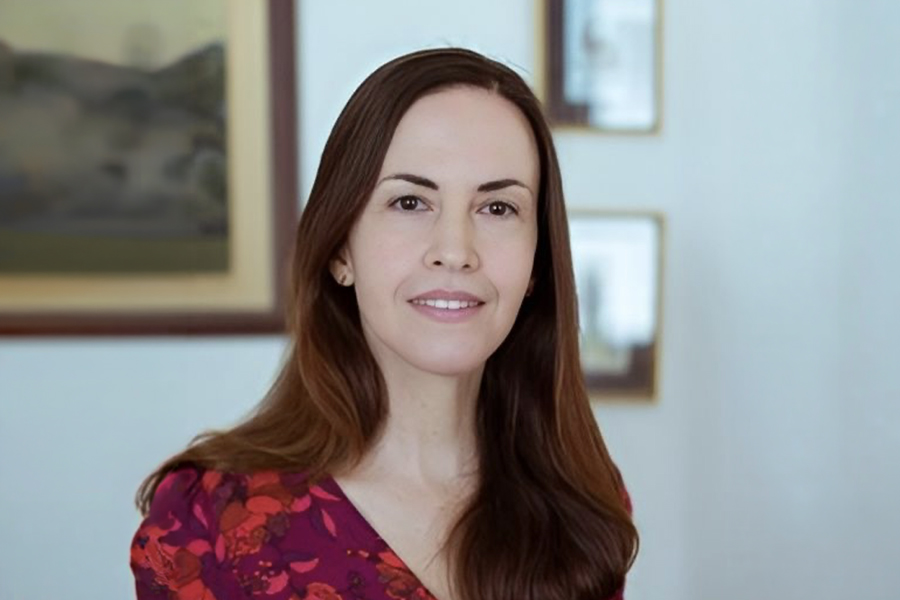
Helena de Bres is a professor of philosophy at Wellesley College and a creative writer. Most of her recent writing combines personal narrative with philosophical reflection, about meaning in life, human relationships, and what memoir and philosophy are and why they matter. She is the author of "Artful Truths: The Philosophy of Memoir," published by The University of Chicago Press in 2021, and "How To Be Multiple: The Philosophy of Twins," published by Bloomsbury Publishing in 2023. Her book "Philosophy in the First Person" will be published by The University of Chicago Press in 2027. Her personal essays, philosophical and otherwise, have appeared in The Point, The Los Angeles Review of Books, The Yale Review, Colorado Review, The New York Times and The Guardian, among other places. Her website can be found at www.helenadebres.com.